Tree Roots in Your Sewer Line: Signs and What Comes Next
QUICK ANSWER: Tree roots get into a sewer line through joints and hairline cracks, then grow into a fibrous mat that catches everything flowing past. The usual signs are slow drains in more than one fixture, gurgling toilets, a drain that clears and clogs again within weeks, and soggy or unusually green patches in the yard. A camera inspection confirms the roots and shows the condition of the pipe. From there, the next step is clearing the roots with a cutting head or high pressure water, and if the pipe itself is damaged, rebuilding that section so the roots have no way back in.
Nothing underground fails politely, and roots are the quietest way a sewer line goes bad. There is no bang and no sudden flood. First one drain gets lazy, then the toilet burps when someone showers, then a clog you cleared in spring is back by summer. Meanwhile, a few feet beneath the lawn, a tree is doing exactly what trees do, which is chase water. Your sewer line happens to be one of the most reliable water sources on the property.
Around Providence, Cranston, Warwick, and the older towns across Rhode Island and into Massachusetts and Connecticut, this is one of the most common reasons a line quits working. The housing is old, the pipes are older, and the maples, oaks, and willows along the property line have had decades to find them. Here is how to read the warning signs, what the roots are really doing down there, and what comes next once you know.
How Roots End Up Inside a Sewer Pipe
Roots do not break into a healthy pipe. They find the weak spot and move in. A sewer line carries warm, nutrient rich wastewater, and a tiny amount of that moisture and vapor escapes through the smallest flaws in the pipe. Fine root hairs pick up on it the way a plant reaches toward a window. They follow the moisture to a joint that has shifted, a hairline crack, or a seam where a section of clay or cast iron has settled out of line.
Once a root hair slips through a gap, it finds an ideal environment inside: constant water, constant food, and no frost. It thickens and branches. Over a season or two, that single thread becomes a dense, fibrous mass that fills the pipe like hair in a shower drain. The roots also push outward on the gap they entered, widening it, which lets more roots in and lets soil wash into the line.
This is why older materials are hit hardest. Clay tile sewer laterals were laid in short sections with many joints, and every joint is a possible doorway. Cast iron corrodes from the inside and scales over, leaving rough, pitted surfaces that roots and debris both grip easily. Neither material is the problem on its own. Age, ground movement from New England frost cycles, and a big tree nearby are what combine to cause one.
The Signs Something Is Growing in Your Line
Roots rarely announce themselves with one dramatic symptom. They show up as a pattern, and the pattern matters more than any single event.
Slow drains in more than one place are the earliest and most common clue. A single slow sink usually has a local clog. When the tub, the kitchen sink, and the laundry all drag at the same time, the problem is downstream of all of them, in the main line they share.
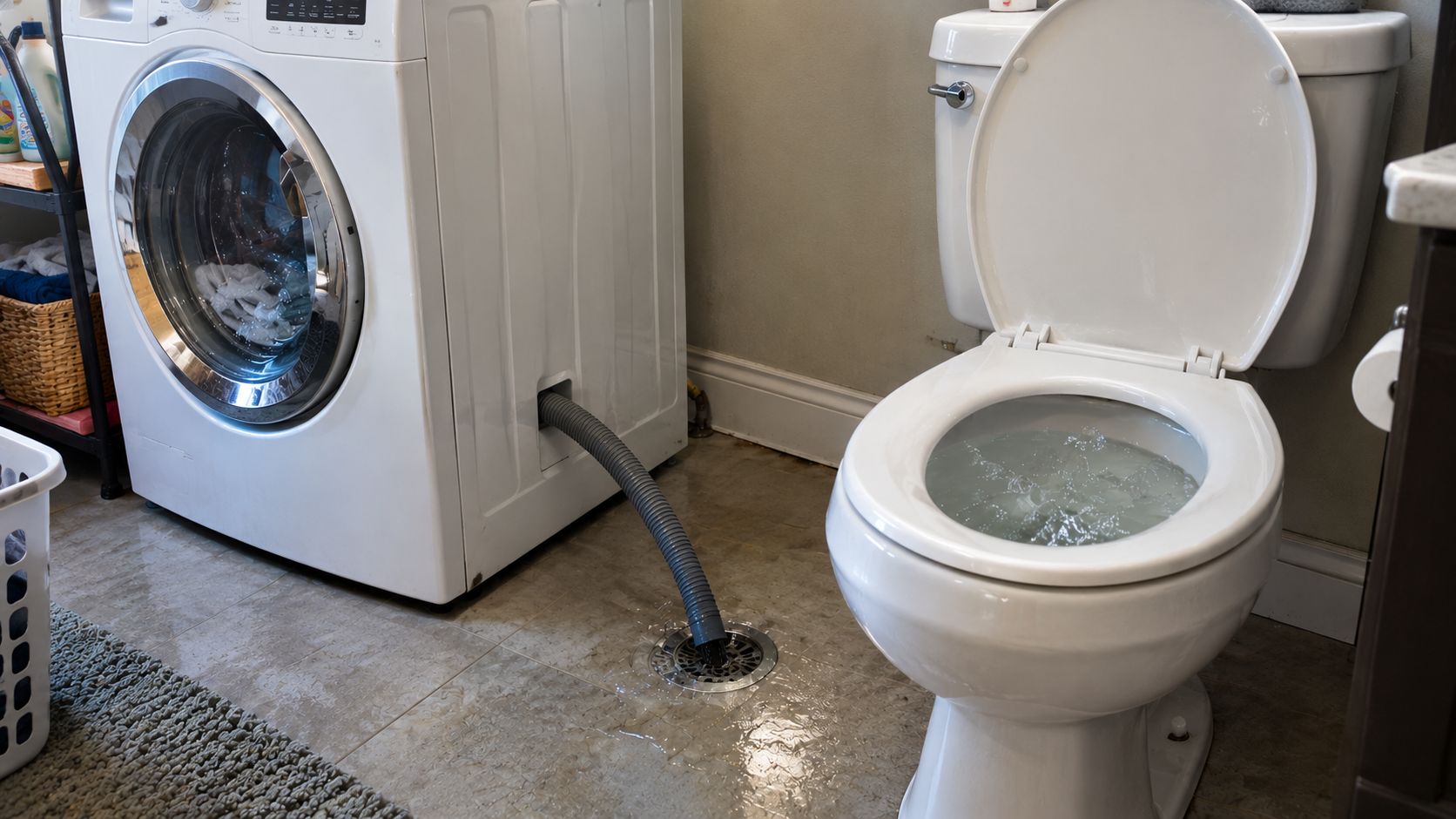
Gurgling is the next sign. Water moving through a partly blocked pipe pushes air ahead of it and pulls air behind it, and that air has to go somewhere. It bubbles back through the nearest trap, so you hear a toilet glug when the washer drains or a shower send a burp up through the floor drain. If you have noticed that sound, it is worth reading about what a gurgling toilet means when the washing machine drains, because the root mat is a classic cause.
A clog that keeps returning is the one that gives roots away. A grease clog or a wad of paper gets cleared and stays cleared. A root mass that has only been poked through will regrow, and the same line will back up again in a few weeks or a few months. If you have had the same drain cleared more than once and it keeps coming back, stop treating it as bad luck.
Outside the house, the yard can tell the story too. A patch of grass that is greener and thicker than the rest, sitting in a line from the house toward the street, can mean a leak is feeding the soil. Soft, sunken, or damp ground over the sewer path points the same way. In bad cases, you may see a slow backup show up first in the lowest drain in the house, usually in the basement floor drain or the basement shower, since that is where wastewater surfaces when the line cannot carry it away.
TIP: If you can safely reach your cleanout, the capped pipe usually near the foundation or in the basement, note what the drains do after a heavy rain or after a big laundry day. A line that is fine on a quiet morning and backs up when several fixtures run at once is often a partly blocked line, and that detail helps whoever comes to look at it.
Why a Plunger and a Bottle of Chemicals Do Not Solve It
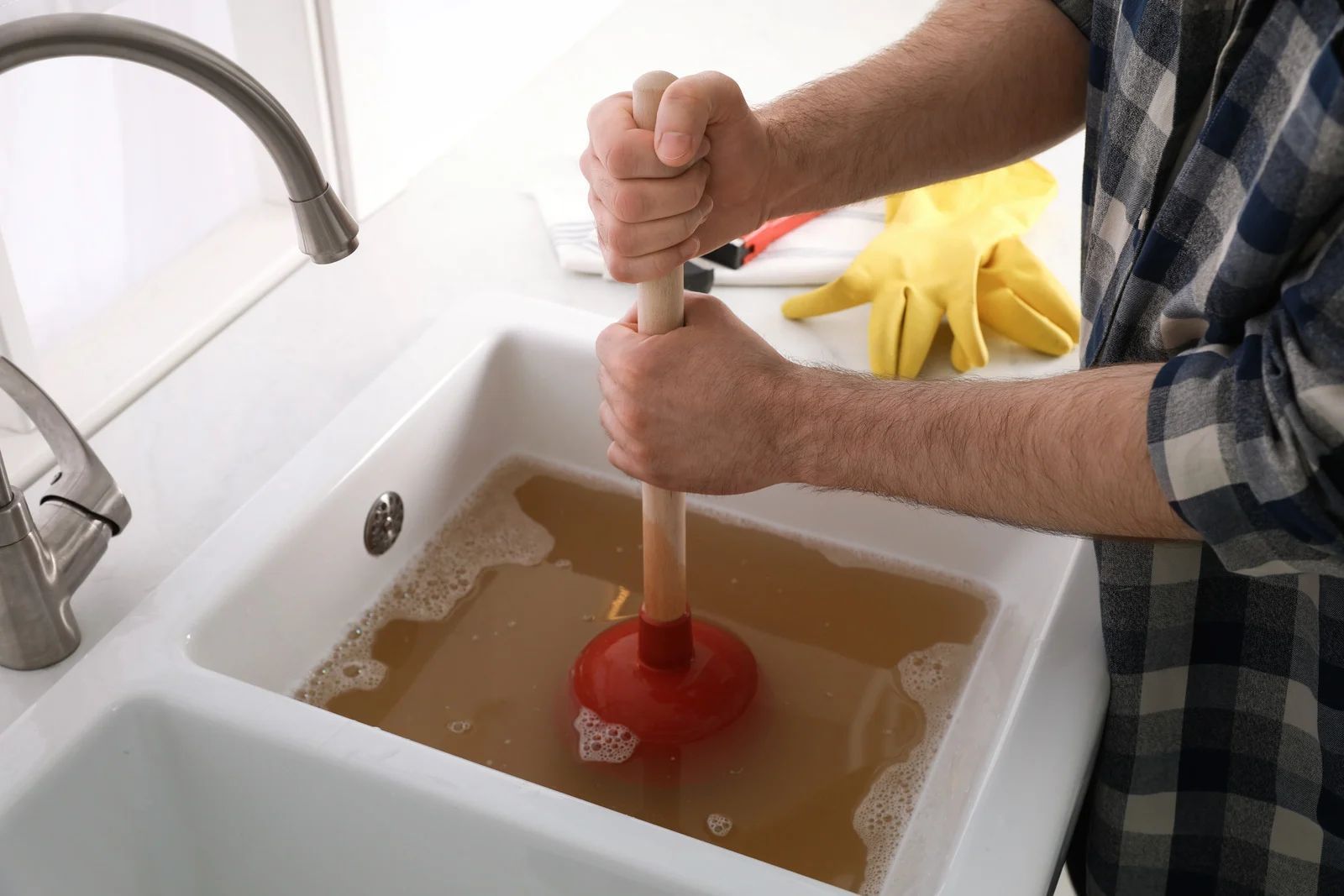
The tools most homeowners reach for are built for a different problem. A plunger works on a clog in the fixture or the short branch right below it. It has no reach into a main line that runs fifty or a hundred feet to the street. A small hand auger can sometimes punch a hole through the center of a root mass, which restores flow for a few days and leaves the bulk of the roots in place to keep growing.
Store bought drain chemicals are the weakest answer of all. Roots are living wood. A liquid poured into a line with standing water sinks to the low point and sits there, doing nothing to a root mass that may be many feet away,. Older metal waste pipes in particular do not benefit from a chemical bath, and anyone who later opens the line has to deal with what is in it.
The honest reason these quick fixes fail is that none of them answers the two questions that actually matter: how far back do the roots go, and what condition is the pipe in where they got in. You cannot see either one from the surface. That is where the camera comes in.
What a Camera Inspection Shows Before Anything Gets Cut
The right order is look first, then decide. A small waterproof camera on a flexible cable goes into the line through a cleanout. As it moves, it sends back a live picture of the inside of the pipe, and the crew watches in real time and records it.
In a line with roots, the picture is unmistakable. You can see where the first fine threads enter at a joint, where they have thickened into ropes, and where the mat has grown into a solid plug. The camera also tells you what the roots are hiding. It shows whether the pipe walls are smooth or scaled, whether a joint is offset by an inch or more, whether a section has cracked or a belly has formed where the pipe sagged and holds water.
It also gives distance. Knowing the problem sits forty feet from the cleanout, not just somewhere in the line, is what makes it possible to repair that exact stretch instead of guessing. That is why a camera goes into the line before any quote at Reliable Sewer and Drain. The inspection is what lets the work match the actual failure.
Clearing the Roots
The first job is getting the line open and the roots out of the way. There are two main tools, and the camera helps decide which one fits.
A motorized cable machine with a root cutting head spins a set of blades inside the pipe. It is built to chew through woody roots that a bare auger would only punch a hole in. The cable is sized to the pipe, and the cutter works its way along the mass until the line runs clear to its full diameter. This is the right tool when roots are the main obstruction and the pipe walls are in decent shape.
High pressure water jetting works differently. Instead of cutting from the center, it scours the whole inside surface. Water forced through a nozzle at high pressure strips off root hairs, grease, and scale that cutting leaves behind, so the pipe is returned to bare material along its wall. On lines with heavy buildup, the usual approach is to cut first, then jet, then run the camera again to confirm the line is truly open. That second pass matters, since it shows the owner the clean pipe and any damage the roots were covering.
Here is the part nobody should skip over. Clearing the roots removes the symptom. It does not remove the doorway. If the roots got in through an open joint or a crack, that opening is still there after the cutting, and the tree is still nearby. Roots will begin finding their way back in. Depending on the pipe, that can mean months between problems or a few seasons.
When the Pipe Itself Needs Work
If the camera shows the pipe is damaged, the lasting fix is repairing the pipe, not cutting the roots on a schedule. The repair that makes sense depends on what the camera found.
A single failing joint or a short cracked section can be handled with spot lining. A resin saturated liner is positioned over the damaged length and cured in place, sealing the gap that the roots were using. For a longer run of damaged pipe, full length lining rebuilds the entire line from the inside. A felt liner saturated with resin is pulled into the old pipe and cured, forming a jointless new pipe inside the old one. With no joints, there is nothing for a root hair to enter. This is the trenchless approach, and in many yards it means the lawn, the driveway, and the mature tree stay right where they are.
Some pipes are too far gone for lining. A section that has collapsed, a badly offset joint, or a deep belly that holds water may need to be replaced. Pipe bursting pulls a new pipe through the path of the old one, breaking the old pipe apart as it goes, and open excavation is sometimes the right call when a section has to come out entirely. The camera footage is what tells the crew which of these applies, and it shows you the same picture so the decision is not a mystery.
WARNING: Do not try to run a rented drain machine into a line you suspect is cracked or collapsed. A spinning cutter inside a damaged pipe can catch on an offset joint, tear the edge of a crack wider, or lodge in a collapsed section, and then a clog turns into a retrieval problem that may need digging.
What You Can Do to Keep Roots From Coming Back
Prevention comes down to knowing your line and watching the pattern. If your property has a large tree near the sewer path and the home is older, treat a slow drain as information instead of an annoyance. Getting the line looked at after the first repeat clog is far less trouble than waiting for the backup that ruins a Saturday.
Keep track of where your cleanout is and keep it accessible, so a camera can get into the line without a search. Avoid planting thirsty species such as willows, silver maples, and poplars close to the lateral line. If a tree is already there, a periodic cleaning and a camera check can catch root growth while it is still thin, long before it becomes a plug.
And if the camera has already shown that roots are entering at a failed joint, fix that joint. Repeated root cutting on a damaged pipe is the long way around. The tree will always win a contest of patience with a cracked pipe.
Frequently Asked Questions
How do I know if tree roots are in my sewer line?
Look for the pattern: slow drains in several fixtures, gurgling toilets, a clog that returns, and damp or unusually green yard spots. A camera inspection confirms the roots and shows the pipe's condition.
Will the roots grow back after they are cut?
They can. If the pipe still has an open joint or crack, new roots will find it. Repairing or lining the damaged section closes the entry point for good.
Does every root problem mean digging up the yard?
No. Many are solved by clearing the line, and many damaged pipes can be rebuilt with trenchless lining. Digging is reserved for collapsed or badly failed sections.
Are some trees worse for sewer lines than others?
Willows, poplars, and silver maples chase moisture aggressively, but any large tree near an older line with open joints can cause trouble. Distance and pipe condition matter too.
Can roots damage the pipe, or do they only block it?
Both. Roots form a blocking mat, and as they thicken at a joint or crack they push it wider. Left alone, a root problem tends to become a repair problem.
Know What Is Growing Before the Line Backs Up
Roots in a sewer line rarely cause a sudden disaster. They arrive as slow drains, a gurgling toilet, or a clog that keeps returning, and each of those is worth taking seriously. Once a camera shows where the roots entered and what shape the pipe is in, the path forward becomes clear. Clearing the line restores flow, and repairing the damaged section closes the doorway. Acting on the first repeat clog keeps a small problem small.
With 30
years of experience serving Providence, RI, Reliable Sewer and Drain
has watched maples, oaks, and willows find their way into old clay and cast iron laterals more times than anyone could count. Looking inside the pipe before any work begins lets the repair match the actual failure instead of a guess. Homeowners who deal with the entry point, not just the roots, usually enjoy years of quiet plumbing and keep their yards intact.